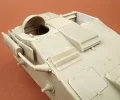
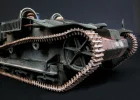
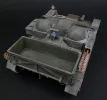
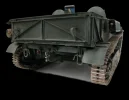
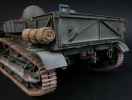
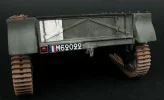
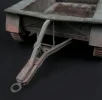
The Battle of the Stonne France 1940

Gérard Deygas

🇺🇳 Niet Nederlandstalig
Hello everyone,

After a prolonged absence, I am very happy to be back with you on the forum... In recent months, I’ve been working on three big 1/16 projects with dioramas that take up quite a bit of space, as you can imagine. So I open a new thread with French material, very rare material on this scale. But the manufacturer told me that they would soon be marketing a new machine, it’s excellent news! I have already booked a copy without knowing what the machine will be.

Presentation

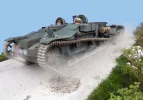
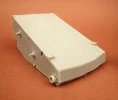
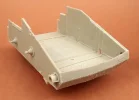
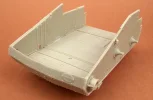
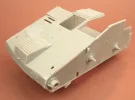
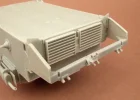
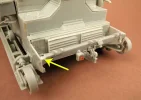
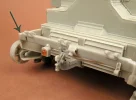
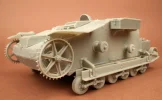
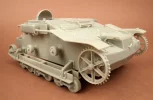
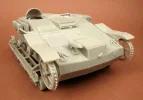
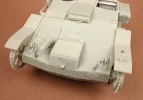
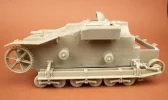
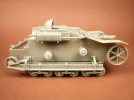
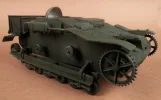
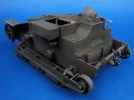
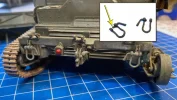
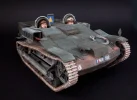
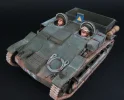
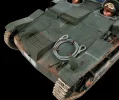
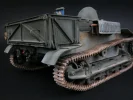
After a superb Renault R35 tank, DES offers us its third model in 1/16, the second being an M29 Weasel. The kit is focused for my greatest pleasure on the period France 1940. This chenillette Renault UE 2, 2 because it is the version of the UE model that has been improved incidentally by the presence of extended mudguards that better protect the body from splashes; new towing hooks and shackles replace those in a pig’s tail. the two Restor lighthouses are removed in favor of a single one – the Guicherd lighthouse. Finally, the gearbox goes from 3 to 4. As always with DES, the quality of engraving, molding, and precision are there. No unpleasant surprises when opening the pouches, where we see the use of 3D printing for a large majority of the parts, more than 200 molded in a pastel gray resin perfectly revealing all the details. The track elements are propose in portions and are preformed for positioning on sprockets and return pulleys. Their implementation will be facilitated. A decal board for a single decoration is included as well as the bust and two headgear of the tankers' helmets (for one of them, the helmet is topped with protective goggles). With this model that will certainly delight fans of the period on this scale, I sincerely hope that the manufacturer will not stop there and that it will offer us, in the near future, a Lorraine 37 L tank or, why not, a more Panzer.
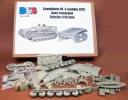
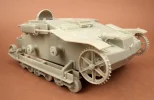
Boite-et-pieces-.webpBarbotin-droit.webpEn-route.webp
 
Laatst bewerkt door een moderator:
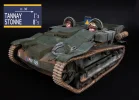
The Battle of Stonne took place from 14 May to 25 May 1940, and the village was captured and recaptured seventeen times after terrible fighting. A small village located 300 meters above sea level in the Ardennes, Stonne is a strategic place and if it falls, it will be impossible to launch a counter-attack on the southern flank of the German army. It is the 3rd motorized infantry division and the 3rd armored division supported by B1 Bis tanks that are mobilized to be sent to Stonne. After several days of fighting and despite incessant artillery fire and shelling by the air force, the Germans did not pass. The courage, perseverance and determination of Stonne’s fighters, despite heavy losses, resulted in a crushing defeat for the Germans, making this battle one of the highlights of the French campaign.
This Renault UE2 model 1937, 2 caterpillar because it is the version of the UE model improved, incidentally by the presence of extended mudguards that better protect the body from projections, and new towing hooks. AMX shackles replace those with pigtails, the two Restor lighthouses are removed in favor of one: the Guicherd lighthouse. Finally, the gearbox is changed from 3 to 4. The crew consists of two men, the driver and the passenger (often a mechanic). As the craft does not have a ceiling, the body being too low, the men are protected by a removable bell equipped with tiny vision slots. Without leaving the vehicle, the tipper installed at the rear is tilted, operated by a mechanism located inside the passenger compartment. Thus dumping ammunition and materials without exposing the crew to enemy fire. The exhaust pipe is protected by a metal sheet equipped with gills for its cooling. The series release of this version will be made from the year 1939.

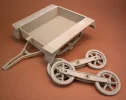
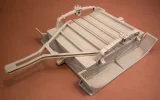
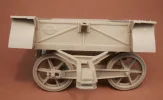
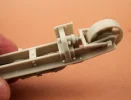
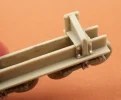
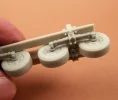
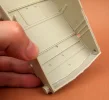
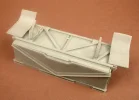
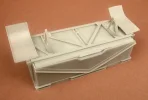
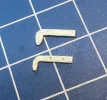
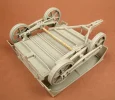
The trailer, assembled in two afternoons, does not reveal any complication during the assembly of the different parts. The front, rear and side panels are positioned on the floor. I recommend spot gluing with a cyano gel glue because it helps to loosen the parts in case of misplacement, which happens. Liquid glue does not allow any right to error without breaking! Small recommendation, when you start assembling a resin kit, always work with new glue tubes because very often the glue from started tubes is too long to dry and especially less effective! These glue points are then reinforced by deposits of liquid cyano glue deposited at the end of a used X-Acto blade. There are two minor inconsequential errors in the assembly plan, which have certainly been corrected today. The X2 601 crossbars do not exist and the handles on the rear door are not straight but formed in a semi-circle. Rest assured, the right handles are indeed present in the box. Two conical bolts are missing on the crossbar, parts extracted from a Verlinden set. The reinforcement bar, part 613, is too short; more than 4.5 mm are missing to connect the two ends. This is a rare defect at DES, but as everyone knows, the 3D prototypes are not made by hand, there are some defects! I lengthened this part with the Evergreen profile. Therefore, the small positioning stop no longer needs to be there. The metal rod connecting the trailer carriages does not pass through the holes supporting the leaf springs of the suspension. I replaced it with a wooden skewer, its length is 84 mm. The frame will only be fixed after painting the whole thing; the rubber bandage on the rollers will therefore be easier to paint.

photo-1.webpPhoto-2.webpPhoto-3.webpPhoto-7.webpPhoto-4.webpPhoto-5.webpPhoto-6.webpPhoto-8.webp
 
Laatst bewerkt door een moderator:
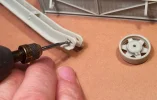
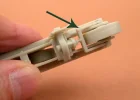
The passage for an axis (length 12.5 mm and diameter 1.5 mm) is too narrow, we will enlarge the center of the light using a milling cutter. The return pulley does not fit into its housing; the cabochon, which is too thick, must be reduced by a good millimeter. To do this, the part is sanded by a circular movement on a sheet of medium-grain sandpaper. The bracket of the return pulley, part 514, is too wide; it needs to be 12 mm outside. So you need to cut and move the rear pillar closer by 1, 5 mm. In order to align the large crossbar supporting the running gear on the crate, I added a shim cut from flat Evergreen material. The fixation to the body will thus be reinforced. The fastening bolts of the front and rear sabots, which are too small, are replaced by parts cut out from the plastic card with the Punch & Die Hexagonal. The same will be done for the support plate of the caterpillar cleaning shoe, part 502. A few bolts are missing, which will need to be added on the large crosspieces; they can be clearly seen in the photos.

Photo-A.webpPhoto-B.webpPhoto-C.webpPhoto-D.webpPhoto-E.webpPhoto-F.webpPhoto-G.webp
 
Laatst bewerkt door een moderator:
For me, the most delicate part of the assembly was joining the front armored plate to the sides and the floor. Again, I used points of cyano gel glue, respecting a correct setting time for the glue and starting with the front shielding on the left side of the crate. Then, with the right wall. This connection is then reinforced from the inside with liquid glue. Therefore, all that remains is to present the floor to ensure that the whole does not reveal any particular defect.

Av-Cotés-caisse1.webpAv-Cotés-caisse2.webpAv-Cotés-caisse3.webpAv-Cotés-caisse4.webpCaisse-1.webpCaisse-2.webpCaisse-3.webpCorrection-paroi.webp

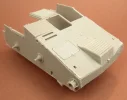
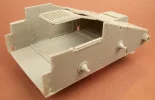
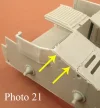
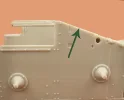
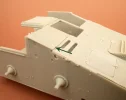
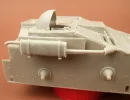
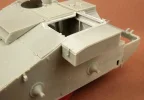
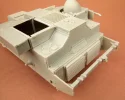
The top plate in place with its access hatches to the transmission, battery and various mechanical components. When I wanted to install hatches 125 and 126, which had to be positioned in the extension of the upper front armored plate, I couldn’t because the side pillar of the crate, part 102, is too high and this moves the hatch. This defect is very clear in photo 21. We will have to remove material to correct this error; the resin is tender and the correction is quick, with no consequences on the rest of the assembly. The manufacturer was informed of this change.
 
Laatst bewerkt door een moderator:
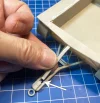
A clean build Gérard. Up to the next.
 
Thank you.
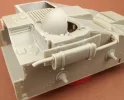
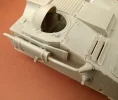
The front hatches are in place as well as the protrusion where the plate supporting the exhaust pipe is fixed. The molded protuberance on the top of this part is removed, still with a flat file. Before installing the hatches and cupola, the visible part is painted Blanc 5 Revell. It’s at this stage that you have to choose whether or not to put a crew in the cabin because, once the hatches are glued together, there is no easy way to install them. The bust included in the kit will have both arms amputated and will be, for me, the driver.
The chest in place. Sometimes there is a padlock.
I added a small 2/10 disc, die-cut by Punch & Die, on each of the axes of the support rollers. It will allow the track to be perfectly aligned during its installation. The exhaust pipe. Shorten the outlet tube by 5 mm and drill into its end. The top plate, the passenger dome, and the two deflectors are in place. The part holding the exhaust pipe at the exit of the body has a rather bizarre shape, a complex form not reproduced on the kit. At that moment, I hadn’t yet chosen how to realiz

Photo-29.webpPhoto-30.webpphoto-28.webpPhoto-27.webpPhoto-25.webpPhoto-26.webp
 
Laatst bewerkt door een moderator:
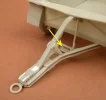
The well-advanced rear panel with the upper part and its tank access hatches. The ventilation grilles. The transverse beam on which the bucket will be positioned.
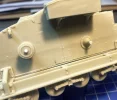
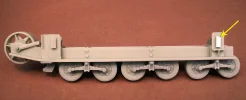
To make it easier for assembly, I preferred to glue the rear mudguards under the trailer bed; this operation was done quickly. But for this, a notch must be made on each side of the crosspiece. Reduce by 1.5 mm in height and 3.5 mm. The position light glass comes from a bag of microbeads. The running gear is glued, as well as the mudguards and certain accessories such as the Guicherd headlight and the AMX shackles. I added three small handles formed on a round Evergreen profile. The drive sprocket are not bonded; they will only be after the tracks have been laid.

The mudguards are in place. The shackle are connected to the glacis with a small chain.

Photo-31.webpPhoto-32.webpPhoto-33.webpPhoto-34.webpPhoto-35.webpPhoto-36.webpPhoto-37.webpPhoto-39-bis.webpPhoto-40-bis.webpPhoto-41-bis.webp
 
Laatst bewerkt door een moderator:
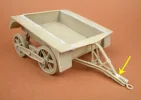
The rear light..Painting of the whole. This is only an interpretation because it is not easy to find the green that was applied. The trailer et chenillette are painted with a mixture of Dark Grey 66 Revell + Dark Green 68 Revell, 10% gray for 30% green diluted with 50% white spirit. The road wheels is painted separately. The rubber of the rubber lined wheeels is covered with a mixture of Terre 82 Revell + Noir 6 Revell. After a good night of drying, a black wash of Rembrandt Oxide + Terre 82 Revell is applied. Then comes the spraying of a matte varnish Nuance found at Cultura at a very affordable price, it will effectively protect the base shade.

Phare-arr-1.webpPhoto-38.webpPhoto-39.webppeinte-Bonne-1.webppeinte-A.webp
 
Laatst bewerkt door een moderator:
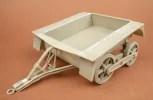
The rear of the hull is ready to receive the benne. You will need to add an axle start, round Evergreen, to the AMX shackles; otherwise, they won’t fit in their housing. They are connected to the hull by a chain. The coupling hook and the light are in place. Painted Red 36 Revell with a hint of black, it is covered with glossy varnish.
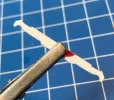
The door of the benne is kept closed by two locks that tilt for opening. I have corrected those proposed in the kit. The supports are redone in plastic card 5/10

Photo-43-bis.webpPhoto-45.webpPhoto-44.webpphoto-46.webpMusée-A26.webp
 
Laatst bewerkt door een moderator:
Since this equipment had not been under fire before that period, I created a sober patina, with no signs of impact, severe wear, or any special damage. Only dust is indeed present. This dust is obtained by a mixture of ochre de Ru pigment (a clear earth) found at Cultura, and white. Placed in an aluminum tray, the value of half a hazelnut, it is copiously covered with essence F and applied to the model with a brush. To begin with, the mixture is brushed on the sides of the body to assess the effect reproduced. This is the most exposed and visible part of the vehicle in motion with the hull. After a few minutes of drying, you can check the result; he will set the dilution for the rest of the application. If you are not satisfied because of too much pigment, you can always remove it with a flat brush soaked in gasoline F. As always, it is important to protect yourself with a surgical mask during these painting steps to avoid gasoline fumes. Some parts of the front shielding have different dust, I added a strand of brick red pigment to my mixture. The towing plate raised when vehicles are towing a trailer, facing oncoming vehicles, theoretically gives priority. When the trailer is absent, it is in the lowered position. This plate was not reserved only for military equipment but also equipped civilian vehicles. It is painted Blue 25 Humbrol + White 5 Revell. The registration is preceded by the blue, white, and red flag; it is painted in the center of the front armored plate. Note that a large number of chenillette were named with female names. On the left, the tonnage class grenade.

The steel tow rope is quite thin, I did a lot of research to find one that matches the ones fitted on the chenillette. Finally, I found my happiness at Karayah. The sleeve contains three lengths of copper with different diameters. Each cable reaches 70 cm, there is plenty to do! The loops of the cable have their origin in a Tamiya Panther (1/35), they are reduced in length to make them look like those mounted at each end. The whole is painted with a mixture of Revell 47 Grey + Revell 5 White.

Photo-48.webpPhoto-49.webpPhoto-50.webpPhoto-51.webp
 
Laatst bewerkt door een moderator:
That looks superb as usual 🙂
 
At least this is a small model in 1:16 scale 🙂
 
On the exhaust pipe, the dark rust base is painted with a mixture of Burnt Sienna Winsor & Newton + Stil from Grain Brown Rembrandt + Earth 82 Revell + Black 6 Revell. The light rust is applied the next day with a rust pigment diluted in gasoline F. Not included in the kit, the part that keeps the exhaust at the exit of the cabin is particularly elaborate. To restore it, first of all, I glued two small 2/10 plastic card discs cut out using Punch & Die cutters. They are topped by two conical Verlinden rivets. The bizarre shape is made in Magic Sculpt.
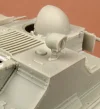
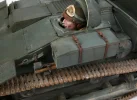
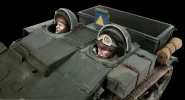
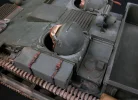
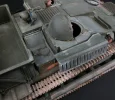
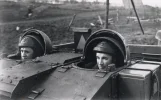
The chest is held by leather straps, as well as the set of tools, the pickaxe, the shovel... All the leather straps, made of tin sheet, are painted from a mixture of Rembrandt Brown Grain Stil + Winsor & Newton Burnt Sienna + Terre 82 Revell + Noir 6 Revell. Rework after drying with a blend of Stil from Grain Brown W&N and Blanc 5 Revell. The loops are made of tin wire. The driver smokes a Gauloise. The driver’s and passenger’s heads with their helmets leave little space under the armored domes. Inside, the noise and high heat due to the proximity of the engine, the smell of oil, gasoline, made moving difficult for men. The narrowness of the vehicle, the seat more than uncomfortable and also very low, increased a feeling of insecurity on board. The protective dome and its vision slots. What can we say about these vision slits that are far too narrow to distinguish properly between the road and external movements! It will be necessary to add the two ends of the locks that block these domes in the raised position. At the back, access hatches to the reservoir.

Photo-52.webpPhoto-53.webpPhoto-54.webpPhoto-55.webpPhoto-56.webpEquipage-Chenillette.webp
 
Laatst bewerkt door een moderator:
The exhaust cover sheet. I would have preferred it in photo-etched so that the ventilation holes are open. So I cheated by painting the openings in trompe l'œil.
The base of the Guicherd lighthouse must fit into a hole for positioning. The manufacturer forgot the hole in the top plate of the crate, it will not be difficult to drill it, the resin is very tender. The AMX shackles are connected to the cash register with a small chain originating from Green Stuff World.
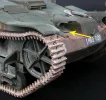
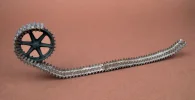
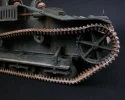
The drive sprocket and the track with part of the undercarriage. I found the idea of offering a preformed track to be excellent. One part is positioned on the sprocket, one on the return pulley. All that remains is to install and connect the track sections above and below, making assembly much easier. Before their installation, they are painted Dark Brown 84 Revell then, 24 hours after drying, covered with the same mixture as the dust deposited on the kit. The steel parts in contact with the ground are metallized with wax to skate in Pébéo Argent tube, same for the drive sprockets' teeth.

Phare-avant.webpMont-chenille.webpBarbotin-droit2.webpBarbotin-3.webp
 
Laatst bewerkt door een moderator:
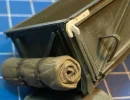
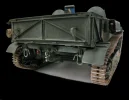
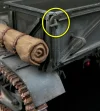
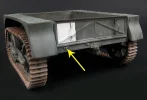
The tipper is in place. The rear light is placed just behind the towing plate. The door of the bin is equipped with two stops. On the side, there is a tarpaulin that protected the equipment stored in the bin. A webbings passed through holes drilled in a stop welded on the plate, simple but effective! Right side of the dumpster with its cylinder and mudguard. The lower part of the body and the clearly visible parts, shackles, light, on the right of the coupling hook are the connections for the trailer. The latch of the door in place, freshly painted, is not yet patinated.
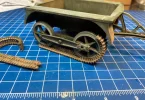
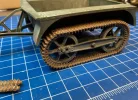
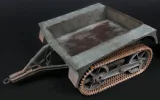
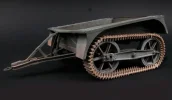
The majority of manufacturers have long accustomed us to assemble track elements skate by skate... Depending on the number of pieces that make up them, it’s long and sometimes laborious... DES stands out by offering us preformed track elements that are quick to implement. On the trailer, we find the same layout as on the crawler: the sections formed for the drive sprocket and the return pulley and the separate straight sections. In a short time, the caterpillars are in place.

Unlike the chenillette the trailer floor and its surroundings are not spared from pronounced marks on the floor resulting from loading and unloading of transported equipment as well as from the numerous impacts sustained during maneuvers in the field. This results in the presence of impacts, scratches etc... revealing a brown rust made with a mixture of Terre 82 Revell + Noir 6 Revell and Rouge Scarlet Lake from Winsor & Newton. Applications are first carried out with a Scotchbrite pad dipped in the mixture diluted with white spirit, finishing is done with a flat brush with hard bristles. As in reality, the trailer tilts and will allow a different presentation. We can see the lugs screwed onto the body, housings to hold the license plate. A large white square is painted at the rear of the trailer; by the light from the headlamp, it makes it easier to distinguish vehicles in convoy during night driving. The rear of the trailer has a license plate made from aluminum foil. A high beam headlamp is positioned in a metal box, cut out of plastic card 4mm x 4mm on the side for 2.5 mm depth.The light has the same origin as the tail light of the snowcat, it is painted with a mixture of Revell 36 Red + Revell 6 Black then covered with a glossy varnish. Two chains equipped with a pin “welded” on each side of the rear panel. The arm in detail...

Photo-60.webpPhoto-61.webpPhoto-62.webpPhoto-63.webpPhoto-64.webpPhoto-65.webpPhoto-66.webpPhoto-67.webpPhoto-68.webpPhoto-69.webp
 
Laatst bewerkt door een moderator:
Terug
Bovenaan